
Hey there future service management pro! Feeling the pressure of that upcoming certification exam? I totally get it.
In today’s dynamic world, where customer experience is king and innovations like AI are reshaping service delivery, staying ahead is crucial. Sifting through countless study guides can be overwhelming, but I’ve personally discovered what truly makes a difference in not just passing, but excelling.
It’s about practical insights, not just rote memorization. Ready to cut through the noise and get exactly what you need to ace it? Let’s uncover the secrets to mastering your Service Management exam, right here, right now!
Demystifying the Service Lifecycle: It’s More Than Just a Flowchart
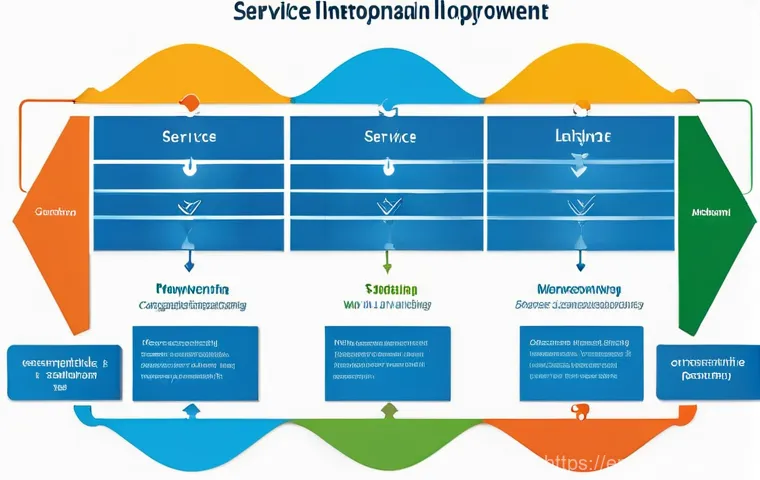
Okay, so when you first look at the service lifecycle, it can feel a bit like staring at a complex diagram with arrows going every which way, right? I totally felt that at first. But trust me, once you dive in and start seeing how each phase isn’t just a theoretical concept but a living, breathing part of how a company serves its customers, it clicks. It’s not just about memorizing definitions; it’s about understanding the synergy between Service Strategy, Design, Transition, Operation, and Continual Service Improvement. I remember struggling with the nuances of Service Transition, thinking it was just about rolling out new tech. But then I realized it’s really about managing change effectively for the users, ensuring minimal disruption, and getting that buy-in. It’s about bridging the gap between what was designed and what actually goes live, making sure everything from documentation to training is spot on. If you can explain *why* each phase is crucial and *how* it impacts the others, you’re golden. Think of it like a finely tuned orchestra; every instrument has its part, and they all have to play in harmony for the magic to happen. It’s a holistic view of delivering value, not just a sequential process. Seriously, once you grasp this interconnectedness, the entire exam becomes less about recall and more about applied understanding, which is a game-changer.
Embracing Customer-Centricity: The Heart of Service Excellence
This is where the rubber meets the road, folks. For me, understanding customer-centricity wasn’t just a bullet point in a study guide; it was an epiphany that transformed my perspective on service management. It’s about putting the customer at the absolute core of every decision, every process, and every interaction. It’s not enough to *say* you’re customer-focused; you have to *be* customer-focused in your operational DNA. I’ve personally seen businesses thrive when they truly listen to feedback, anticipate needs, and proactively address pain points. Think about those times you’ve had an amazing customer service experience – it wasn’t just about solving your problem, was it? It was about feeling heard, valued, and respected. The companies that nail this understand that delighted customers aren’t just one-time transactions; they become loyal advocates. For your exam, this means really internalizing how customer value drives everything from strategic planning to incident management. How does a new service design enhance the customer journey? How does an improved operational process reduce customer effort? If you can articulate the “why” behind every service decision from the customer’s viewpoint, you’ll not only ace your exam but also stand out as a true service management professional. It’s about empathy, efficiency, and ultimately, ensuring your customers keep coming back for more.
My Go-To Study Hacks That Actually Work
Let’s get real, nobody wants to spend endless hours staring at textbooks feeling like their brain is turning into mush. I’ve been there! My absolute game-changer for studying wasn’t about more time, but smarter time. I found that breaking down massive topics into smaller, digestible chunks made a huge difference. Instead of trying to cram an entire service management book in one go, I’d dedicate an hour to, say, “Change Management” concepts, then take a short break, and switch to “Problem Management.” This method kept my brain engaged and prevented burnout. What really sealed the deal for me was explaining concepts out loud as if I was teaching someone else. If I could articulate it clearly without notes, I knew I truly understood it. If I stumbled, that was my signal to go back and review that specific area. Seriously, try it – even if you’re just talking to your cat! Another secret weapon? Flashcards. Not just digital ones, but good old-fashioned physical cards. The act of writing them out helped embed the information, and shuffling through them daily was a quick and effective way to reinforce key terms and definitions. It transforms passive reading into active recall, which is essential for exam success.
Leveraging Practice Exams: My Secret Weapon
If there’s one piece of advice I can shout from the rooftops, it’s this: practice exams are non-negotiable! They were my absolute secret weapon for conquering exam anxiety and pinpointing my weaknesses. It’s not just about getting the right answers; it’s about understanding the *style* of questions, the common traps, and how to manage your time under pressure. I remember my first practice exam feeling like a punch to the gut – I thought I knew the material, but the questions twisted it in ways I hadn’t anticipated. That initial shock was incredibly valuable because it showed me exactly where my knowledge gaps were. After that, I didn’t just review the questions I got wrong; I deeply analyzed *why* they were wrong and what principle I had misunderstood. I also paid close attention to the questions I got right but felt unsure about. Taking multiple practice exams under timed conditions helped me build stamina and confidence, so by the time I sat for the actual certification, it felt familiar, almost routine. Don’t just take one or two; aim for several. Each one is a diagnostic tool, giving you invaluable insights into where to focus your remaining study efforts. It’s like a dress rehearsal for the big day, and trust me, you want to iron out those wrinkles beforehand!
Navigating the Digital Shift: AI and Automation in Service
The world of service management is evolving at lightning speed, and honestly, it’s thrilling to watch. One of the biggest shifts I’ve personally observed and experienced is the integration of AI and automation. It’s not just a buzzword anymore; it’s fundamentally reshaping how services are delivered and managed. When I first started out, the idea of a chatbot handling complex customer queries seemed like science fiction. Now, it’s commonplace, and not just for simple FAQs! AI-powered systems are analyzing data, predicting potential service issues before they even arise, and streamlining routine tasks so human agents can focus on more complex, empathetic interactions. I’ve seen firsthand how intelligent automation can reduce resolution times, improve accuracy, and free up valuable human resources. For your exam, it’s crucial to understand not just *what* AI and automation are, but *how* they contribute to value creation within the service lifecycle. Think about how AI can enhance incident management by quickly identifying root causes, or how automation can speed up service request fulfillment. It’s about efficiency, scalability, and ultimately, a better experience for both customers and service agents. Don’t just memorize the terms; truly grasp the practical applications and the benefits they bring to modern service organizations.
Understanding Service Desk Evolution: From Call Centers to CX Hubs
The service desk – remember when it was just a “help desk” or a “call center”? Boy, have times changed! This evolution is something I’ve found incredibly fascinating and directly relevant to excelling in service management today. What was once seen primarily as a cost center, handling break-fix issues, has transformed into a critical customer experience (CX) hub. Today’s service desk agents are often frontline brand ambassadors, equipped with advanced tools and a mandate to deliver proactive, personalized support. They’re not just logging tickets; they’re diagnosing complex problems, guiding users through self-service options, and gathering invaluable feedback that feeds directly back into service improvement initiatives. I’ve witnessed organizations that empower their service desk teams not just to react, but to anticipate customer needs, often leveraging data analytics to provide predictive support. For your exam, focus on understanding this shift: how the service desk contributes strategically to business outcomes, acts as a communication bridge, and supports both IT and business users. It’s about understanding its role in facilitating seamless service consumption, managing information, and constantly striving to enhance the overall customer journey. It’s a far cry from just answering the phone!
Real-World Scenarios: Applying What You Learn
One of the biggest pitfalls I’ve observed (and sometimes fallen into myself!) when studying for certifications is focusing too much on theory and not enough on application. The exam isn’t just testing your memory of definitions; it’s testing your ability to *think* like a service manager. This means taking those theoretical concepts and applying them to real-world scenarios. I found it incredibly helpful to constantly ask myself, “How would this work in a company I know?” or “If I were the service manager, how would I handle this incident using ITIL principles?” For example, when studying incident management, don’t just memorize the steps. Imagine a critical system outage affecting thousands of users. How would you prioritize? What communication channels would you use? Who would you escalate to? How would you ensure minimal downtime? These kinds of thought experiments solidify your understanding far more effectively than rote memorization. The examiners love to throw curveball questions that require you to synthesize information and make a judgment call based on best practices. So, don’t shy away from case studies or creating your own hypothetical situations. It’s about building that muscle memory for problem-solving within a service management framework. This practical approach not only helps you ace the exam but also prepares you for real-life challenges in your career.
Tackling Tricky Questions: A Mindset Shift
Ever encountered an exam question that just completely stumped you? Yeah, me too! It feels like the air gets sucked out of the room. But I’ve learned that tackling these tricky questions isn’t about having all the answers immediately; it’s about a mindset shift. When I face a tough one, my first instinct now is to break it down. What exactly is the question asking? What are the keywords? Are there any distractor answers that *seem* plausible but aren’t quite right? Often, multiple-choice questions will have two answers that are close, and it’s about discerning the *best* answer according to the framework you’re studying. I also found success in eliminating the obviously wrong answers first. Sometimes, even if you don’t know the correct answer directly, you can narrow it down to two possibilities, significantly improving your chances. And here’s a big one: don’t dwell too long! If you’re truly stuck, make an educated guess, flag it, and move on. Coming back to it with a fresh perspective after you’ve tackled other questions can sometimes provide the clarity you needed. Remember, every question is an opportunity to show your understanding, even if it requires a bit of detective work. It’s about strategic thinking, not just raw knowledge recall.
Mastering Exam Day Nerves and Time Management
Exam day can feel like walking a tightrope, can’t it? All that hard work culminating in a few intense hours. I distinctly remember the butterflies in my stomach before my first major certification exam. But I’ve picked up some invaluable tricks along the way to not just manage those nerves, but actually leverage them. First and foremost, a good night’s sleep is non-negotiable. Seriously, no last-minute cramming until 3 AM! Your brain needs rest to perform optimally. On the day itself, I always make sure to arrive early, giving myself plenty of time to settle in, find my station, and take a few deep breaths. Rushing only fuels anxiety. During the exam, time management is your best friend. It’s a marathon, not a sprint. I typically do a quick scan of the entire exam to get a feel for the length and types of questions. Then, I allocate a certain amount of time per question or section. If a question is taking too long, I mark it and move on, coming back to it if I have time at the end. Don’t let one difficult question derail your entire performance. Trust in your preparation, stay calm, and breathe. You’ve put in the work, now let it shine!
Smart Time Management: Every Minute Counts

When you’re sitting in that exam room, the clock becomes your silent adversary, right? I learned pretty quickly that managing time isn’t just about finishing; it’s about maximizing your score. Before you even start answering, take a minute to mentally (or even physically, if allowed) map out your strategy. How many questions? How much time per question? For most certification exams, a minute or so per question is a good benchmark. If a question feels like it’s eating into more than two minutes, I make an informed guess, mark it for review, and move on. The worst thing you can do is spend five precious minutes agonizing over one question, only to rush through five others you could have easily answered correctly. Another trick I swear by is to answer all the questions you know immediately and confidently first. This builds momentum and confidence. Once you’ve done a sweep, go back to the flagged questions. Sometimes, seeing other questions can even trigger a memory or provide context for those you were stuck on. This approach ensures you secure all the easy points and then dedicate your remaining time to the more challenging ones. It’s a strategic dance with the clock, and mastering it can significantly boost your overall performance.
The Secret Sauce: Why Soft Skills Matter More Than Ever
We often get so caught up in the technical jargon and process frameworks when studying for service management certifications, that we sometimes forget a crucial ingredient: soft skills. And let me tell you, from personal experience, they are the secret sauce that truly differentiates an adequate service manager from an exceptional one. Technical expertise is important, yes, but without strong communication, leadership, empathy, and problem-solving abilities, even the best processes can fall flat. I’ve seen brilliantly designed services fail because the team lacked effective communication during an outage, or because leaders couldn’t inspire their staff to embrace a new way of working. It’s about being able to explain complex technical issues to non-technical stakeholders, mediating conflicts between teams, and truly listening to customer feedback, even when it’s critical. These aren’t skills you can just “cram” for; they’re developed through practice and self-awareness. For your exam, think about how these soft skills intertwine with the core principles. How does good communication enhance incident resolution? How does leadership drive continual service improvement? How does empathy build trust with customers? Understanding this connection will not only help you answer application-based questions but also prepare you for the real-world demands of a service management role. It’s truly about leading with both your head and your heart.
Building Your Professional Network: More Than Just a Resume Booster
After you’ve put in all that hard work and earned your certification, what’s next? For me, one of the most unexpected but incredibly valuable aspects of my professional journey has been building a robust professional network. And no, I’m not just talking about collecting LinkedIn connections! I mean genuine relationships with peers, mentors, and thought leaders in the service management space. I’ve found that these connections are an invaluable resource, offering insights, advice, and even opportunities that you might never discover on your own. There have been countless times I’ve bounced an idea off a contact, gotten a recommendation for a tricky problem, or simply learned about emerging trends from someone who’s actively working on them. It’s not just about what you can *get* from your network, but also what you can *contribute*. Sharing your own experiences, offering help, and engaging in discussions not only solidifies your own understanding but also positions you as a valuable member of the community. Attend industry webinars, join online forums, and if possible, go to local meetups. It’s about creating a support system, learning continuously, and staying inspired. Trust me, investing in your network is an investment in your long-term career success, far beyond the initial thrill of passing an exam.
Beyond the Exam: What’s Next for Your Service Management Journey?
So, you’ve crushed the exam, celebrated your success, and now you have that shiny new certification. What then? The truth is, passing the exam is just the beginning of a truly dynamic and rewarding journey in service management. The landscape is constantly shifting, with new technologies, methodologies, and customer expectations emerging all the time. I’ve learned that true expertise isn’t just about what you *know* today, but about your commitment to *continual learning and adaptation*. For me, this has meant staying current with industry publications, exploring new certifications in areas like DevOps or Agile, and actively participating in professional communities. It’s about applying what you’ve learned, gaining practical experience, and reflecting on what works and what doesn’t in real-world scenarios. Remember, the concepts you mastered for your exam – like Continual Service Improvement – aren’t just theoretical; they’re a blueprint for your ongoing professional development. Never stop asking “how can I improve?” or “what’s the next big thing?” Your certification is a fantastic foundation, but your career growth will depend on how you build upon it. The journey is truly the reward in service management, and every new challenge is an opportunity to learn and grow.
Continuous Learning: Staying Relevant in a Fast-Paced World
In our field, the moment you stop learning, you start falling behind – it’s just the reality of the fast-paced tech and service world! I’ve personally made continuous learning a core part of my professional ethos, and it’s something I absolutely recommend for anyone serious about a long-term career in service management. This doesn’t mean you need to be constantly enrolled in expensive courses, though that can certainly help. It’s about cultivating a mindset of curiosity and exploration. I love diving into industry blogs, subscribing to newsletters from leading analysts, and even just following influential people on social media who are sharing cutting-edge insights. Reading case studies, understanding how different organizations tackle similar challenges, and exploring emerging trends like AIOps or customer journey mapping keeps my skills sharp and my perspective fresh. The certifications are fantastic milestones, but they’re like passports – they get you into the country, but the real adventure is in exploring it! Keep an eye on new frameworks, understand how cloud computing is impacting service delivery, and always be open to new ideas. It’s about being proactive, not reactive, in your professional development. That commitment to always learning is what will keep you relevant, valuable, and excited about your career for years to come.
| Service Management Area | Key Focus | Impact on Customer Experience |
|---|---|---|
| Incident Management | Restoring normal service operation as quickly as possible. | Minimizes disruption, reduces customer frustration, maintains service availability. |
| Problem Management | Identifying and resolving the root causes of incidents to prevent recurrence. | Prevents future issues, improves long-term service stability, enhances customer trust. |
| Change Management | Controlling the lifecycle of all changes, enabling beneficial changes with minimal disruption. | Ensures smooth introduction of new services/features, reduces negative impact of changes on customers. |
| Service Request Management | Managing routine requests for information or standard services. | Provides quick and efficient fulfillment of common requests, improves user satisfaction. |
| Continual Service Improvement (CSI) | Repeatedly creating and implementing improvements to services and processes. | Drives ongoing enhancements, proactively addresses customer needs, elevates overall service quality. |
글을 마치며
Wow, what a ride! It’s truly incredible to look back and see how much the service world has transformed, and how my own understanding has deepened along the way. I sincerely hope that diving into the nuances of the service lifecycle, along with my personal study hacks and reflections on the latest trends, gives you a much clearer path forward. Remember, every challenge you encounter in service management isn’t just a hurdle; it’s actually a fantastic opportunity to learn, grow, and ultimately deliver even more amazing experiences for everyone involved. Keep that passion for improvement burning bright!
알아두면 쓸모 있는 정보
1. Never underestimate the power of practice exams – they’re your absolute best friend for uncovering any blind spots in your knowledge and building unshakeable confidence before the big day.
2. Embrace continuous learning by actively following industry blogs, tuning into insightful webinars, and engaging with professional groups; seriously, the service landscape is always evolving at lightning speed!
3. Spend time honing your soft skills like clear communication, genuine empathy, and effective leadership; trust me, they are just as crucial as your technical know-how in truly excelling in service management.
4. Proactively build a genuine professional network – it’s an invaluable resource for getting expert advice, gaining fresh insights, and even discovering unexpected career opportunities you might never find otherwise.
5. Always seek to apply theoretical concepts to real-world scenarios whenever you can; this practical approach not only solidifies your understanding but also brilliantly prepares you for the complex challenges you’ll face daily.
중요 사항 정리
At its very core, successful service management transcends mere processes; it’s fundamentally about cultivating a deeply customer-centric mindset, committing to relentless continual improvement, and deftly applying both robust technical expertise and those indispensable soft skills. Your professional journey is truly ongoing, so stay endlessly curious, remain actively connected, and consistently strive for nothing less than service excellence in everything you do!
Frequently Asked Questions (FAQ) 📖
Q: What’s the secret to cutting through all the overwhelming study material and really focusing on what matters for the Service Management exam?
A: Oh, I totally get that feeling of drowning in textbooks and online courses! When I first started, I tried to memorize everything, and it just left me stressed and confused.
What I personally discovered, after a lot of trial and error, is that the “secret” isn’t about covering every single page. It’s about understanding the why and the how.
Instead of just reading definitions, try to connect them to real-world scenarios. Think about a problem you’ve faced at work, or even a frustrating customer experience you’ve had, and then see how the service management principles you’re learning could have made it better.
For example, if you’re studying ITIL processes, don’t just list the steps of Incident Management. Imagine a server going down at your company – who would you call first?
What steps would you take? How would you communicate with affected users? This kind of active learning not only makes the concepts stick much better but also prepares you for those tricky situational questions on the exam.
Plus, it naturally builds that practical insight that’ll help you beyond the test, which is what we all really want, right?
Q: You mentioned innovations like
A: I and customer experience. How heavily do these newer concepts feature in the exam, and what’s the best way to prepare for them without getting lost in jargon?
A2: That’s a brilliant question, and one I hear a lot! It’s true, the world of service management is constantly evolving, and the exams are definitely catching up.
While the foundational principles are still super important, modern certifications now weave in topics like AI, machine learning, and especially customer experience management quite heavily.
What I’ve found personally is that you don’t need to be a data scientist to ace these sections. The key is to understand their impact on service delivery.
For instance, think about how an AI chatbot can handle basic customer queries, freeing up human agents for more complex issues. Or how data analytics can help predict potential service outages before they even happen, vastly improving customer satisfaction.
Instead of memorizing AI algorithms, focus on how these technologies enhance or transform existing service processes and the overall customer journey.
Look for case studies or articles that discuss real-world applications of AI in service. I remember a few years ago, I was stumped on a question about proactive problem management, until I thought about how a smart system could flag recurring issues automatically – suddenly, the answer clicked!
It’s all about connecting the dots to practical improvements in service quality and efficiency.
Q: Is this certification just about getting a piece of paper, or will it genuinely help me advance my career and earn more?
A: I used to ask myself the exact same thing when I was first starting out! It’s easy to see these exams as just another hurdle, but let me tell you, from my own experience and watching colleagues succeed, it’s so much more than “just a piece of paper.” A solid Service Management certification genuinely opens doors and significantly boosts your career trajectory.
It signals to employers that you not only understand the best practices but also have a structured, strategic approach to delivering value. I’ve personally seen how having these credentials made a tangible difference in my job interviews and even during salary negotiations.
When I landed my role as a Service Delivery Manager, I truly believe my certification portfolio demonstrated my commitment and foundational knowledge, giving me a huge edge over other candidates.
It’s not just about getting hired, either. It equips you with a universal language and framework for process improvement, problem-solving, and optimizing customer interactions, which are invaluable skills in any organization.
Think of it as investing in a toolkit that you’ll use every single day to make a real impact, which naturally leads to more responsibilities, greater opportunities, and yes, a healthier paycheck too!